Search This Blog

24 May 2013

The Outer — from the Inner

The Outer — from the Inner
Derives its magnitude —
'Tis Duke, or Dwarf, according
As is the central mood —

The fine — unvarying Axis
That regulates the Wheel —
Though Spokes — spin — more conspicuous
And fling a dust — the while.

The Inner — paints the Outer —
The Brush without the Hand —
Its Picture publishes — precise —
As is the inner Brand —

On fine — Arterial Canvas —
A Cheek — perchance a Brow —
The Star's whole Secret — in the Lake —
Eyes were not meant to know.

                                                                                   F450 (1862)  J451

What our eyes see is only the visible manifestation of deeper, more fundamental truths. In terms of humans, our inner truth is a living spirit, a “Brush without the Hand.” Our outer selves, our looks and personas, are the canvas on which the spirit expresses itself.
         Dickinson begins with moods, however. Dukes and dwarves exemplify them. On a Dwarf day one feels much less powerful and confident than when one is feeling Duke-ish. As an order of “magnitude” the Duke is much more expansive and pre-eminent. It isn’t the persona who drives this, however, but some inner “mood,” as if moods have their own singular identity.
        

The next stanza uses the wheel as a metaphor for inner strength and integrity. It is the axis that holds the wheel together on its revolutions. Those “conspicuous” spokes spin about flinging dust all the while. They might look flashy but without the “unvarying” and regulating axis, they would fly apart and go nowhere.
         The final stanzas develop the metaphor of artist and canvas. The unseen artist lives within, painting the outer self on “fine – Arterial Canvas.” As life goes on the outer work of art mirrors precisely the inner self. Dickinson calls it the “inner Brand.” “Brand” here would have multiple meanings: a burned mark of ownership, spiritual essence, identity, and a property label. Over time, Dickinson is saying, our physical selves reflect the work of that unseen inner artist. She may also be suggesting that we are internally branded: a heavenly hurt that leaves no scar, or perhaps the deity’s not-so-gentle mark of ownership.
         Either way, the cheek that we see, the brow that indicates character and personality, become indicative of the true individual just as the star’s reflection in a lake reveals the star itself. The lake represents the eyes (located as they are between cheek and brow). The burning brand of the inner self might be discovered there – except that “Eyes [other eyes] were not meant to know.” 

        While eyes have been called the window to the soul, it is a rare person who can look into another’s eyes and see that soul. As in a wind-ruffled lake, we see distortion – the Duke or the Dwarf, perhaps, or spokes, or the various smokescreens we all hide behind – but not the secret of the star that burns its brand deep within. It is a true poet who can read that lake.

18 May 2013

Dreams — are well — but Waking's better

Dreams — are well — but Waking's better,
If One wake at morn —
If One wake at Midnight — better —
Dreaming — of the Dawn —

Sweeter — the Surmising Robins —
Never gladdened Tree —
Than a Solid Dawn — confronting —
Leading to no Day —
                                                                           F449 (1862)  J450

This rather maddening poem contrasts dark and dawn, waking and dreaming, life and death, and heaven and hell. I find the poem“maddening” because Dickinson’s grammar is so sketchy. Words are left out with abandon and it sometimes isn’t clear to me which clause goes with which other clause.

         The first line begins clearly enough and then the poem slowly slides into the ambiguities and mysteries of the second stanza. It’s tempting to feel that if missing words could be supplied, if grammar could be regularized, then the poem would make complete sense. But I’m pretty sure Dickinson wanted this poem to be suggestive rather than descriptive.
         First stanza: It’s good to dream but waking up is better – as long as you wake up in the morning. If you wake up at midnight, on the other hand, you’d be better dreaming of dawn. After this, I am conjecturing: such dreams would be much sweeter than being confronted by a “Solid Dawn” that doesn’t lead to any day. The dream sweetness would better than even the dreaming, “Surmising Robins” who wake up and gladden the trees with song.
        What is the “Solid Dawn” that leads to “no Day”? While “dawn” suggests a new and heavenly or eternal life, its opposite, “Midnight,” suggests the blackness of torment, the grave, or hell. Dreaming of dawn would be sweeter indeed in comparison. With that in mind, Midnight itself is the “Solid Dawn”: the dark, black of the grave. Waking at the blackness of midnight (remembering that Dickinson would never have experienced the light pollution we currently ‘enjoy’) presages waking into that eternal night. There’s a resulting terror in the last line of the poem, warning that no day will ever follow that black dawn.

Dickinson uses a few word sound groups to emphasize her images. The poem is sprinkled with the “d” sounds that remind us of “death,” but here go with “Dreams, Dreaming, Dawn, Dawn, and Day – all of which take on a darker meaning as the poem progresses. The breathy “W” sounds of “Waking,” and the repeated “One wake” provide a hushed and mysterious mood. The one bit of lightness comes from the “S” sounds of “Sweeter – the Surmising Robins.”


13 May 2013

I died for beauty — but was scarce

I died for beauty — but was scarce
Adjusted in the Tomb
When One who died for Truth, was lain
In an adjoining Room — 

He questioned softly “Why I failed?”
"For Beauty," I replied —
"And I — for Truth — Themselves are One —
We Brethren, are," He said —

And so, as Kinsmen, met a Night —
We talked between the Rooms —
Until the Moss had reached our lips —
And covered up — Our names —
                                                                  
                F448 (1862)  J449

The setting: a mausoleum with separate rooms. The narrator lies in one room, recently dead, but long enough so to have “Adjusted” herself when another body is laid in the next room. The recent arrival strikes up what is to be a very long conversation by provocatively asking his neighbor why she “failed.”
         Helen Vendler claims “failed” is used in the sense of “weaken and die,” as if the pursuits of beauty and truth compelled the seekers to efforts beyond their strength. One thinks of the poet or philosopher burning the midnight oil, scarcely eating, taking no heed for their personal wellbeing until their health failed. But now they have seemingly endless time to contemplate and discuss their two pursuits.
         The dialog between Truth and Beauty is meant to recall two poems from two of Dickinson’s favorite poets: John Keats and Elizabeth Barrett Browning. From the ending of Keats’ “On a Grecian Urn”:

 Beauty is truth, truth beauty, — that is all
Ye know on earth, and all ye need to know.
Keats, according to Helen Vendler, in thinking about beauty would be considering “aesthetic creation and its product.” Truth would be “both philosophical and representational.” The Truth seeker, like Keats, comments that Truth and Beauty are “One.”
Browning takes a slightly different angle in “A Vision of Poets” where a poet is led by a Muse through trial and terror to a vision of great poets of the past whose foreheads were “royal with the truth”:

These were poets true,
Who died for Beauty, as martyrs do
For Truth — the ends being scarcely two.
A moss-covered family mausoleum

So while Keats says that truth and beauty are the same, Browning says it is the people, that the lives and deaths of poets and martyrs for truth are very similar. Both give up their lives. One remembers that Dickinson herself gave up her life, her potentially ‘normal’ life, that is, for poetry.

Dickinson’s Truth seeker takes both Keats and Browning’s positions: Truth and beauty are the same; consequently, the two of them, the two souls in the mausoleum, are “Brethren.” Beauty, note, makes no comment except that “as Kinsmen” they spoke together until the moss covered their names. Their “lips” would be, as in F210, the granite grave markers. Their conversation would have lasted at least a hundred years – probably much more!
        The two have an idealized and Platonic relationship, satisfying and comfortable unlike the frustrating relationships Dickinson experienced with many of the people she loved in her lifetime. Nonetheless, a wall separates the two. There will be no physical union or consummation here. Can Truth, one is led to ask, never completely be joined with Beauty?
        Perhaps, but Dickinson sets her scene in a mausoleum, typically a structure to contain the graves of family members. Although she may have simply meant that there were two graves side by side, I think it more likely that she is reinforcing the close kinship between the two. They share the same DNA.

The quiet end is terrible in a way despite its gentle peacefulness. As the moss spreads over bones and stones, it obliterates the separate identities through which the two souls communicated. It is a second death. Nothing fearful about it. The consciousness of the Beauty narrator continues to exist but it is in a diffused state. There is some sort of deep irony about the poem being a communication from that distant state. Perhaps it is a Truth about Beauty.

Another stanza from Browning’s poem also depicts the death of Poet/Beauty as peaceful:

Since sweet the death-clothes and the knell
Of him who having lived, dies well;
And wholly sweet the asphodel

12 May 2013

In falling Timbers buried —


In falling Timbers buried —
There breathed a Man —
Outside — the spades — were plying —
The Lungs — within —

Could He — know — they sought Him —

Could They — know — He breathed —
Horrid Sand Partition —
Neither — could be heard —

Never slacked the Diggers —

But when Spades had done —
Oh, Reward of Anguish,
It was dying — Then —

Many Things — are fruitless —

'Tis a Baffling Earth —
But there is no Gratitude
Like the Grace — of Death —
                                                                     F447 (1862)  J614

I was going to dismiss this poem about how the diggers fight their way through rubble only to find the man just a moment too late. I was going to say the last line was a bit morbid: the would-be rescuers would find no gratitude from a dead man –  or his kin. Their one comfort would be the thought that the trapped man was now dead and out of the reach of suffering.
        But then I thought of Bangladesh, the collapsed factory trapping and killing many women and girls. The death toll has passed 1100 as I write. The diggers there are now, with the amazing exception of a 19-year-old who survived 17 days beneath the rubble, pulling out only dead and decomposing bodies.
      
Thinking on these rescuers, then, Dickinson’s poem takes on a new relevance. No, the diggers in Bangladesh will find little gratitude although no doubt many people appreciate their efforts. But what they must be confronting over and over, are the dead. How else could they cope with this horrific event if they could not reassure themselves that “there is no Gratitude / Like the Grace — of Death”?
       The last stanza bears some unpacking. “Things,” Dickinson rather vaguely points out, are often “fruitless” and this word carries the twin meanings of “barren” and “pointless.” The unspoken question of “why” points to the poets shrugging dismissal: “’Tis a Baffling Earth.” Our sense of justice and happy endings will be constantly thwarted. The rescuers won’t be in time. But (and that transition is key: note that Dickinson does not use “therefore” or “consequently”) death will come. Lovely easeful death – “the Grace – of Death.”
         “Grace” is one of those rich words, blessed with many meanings. Here it suggests the grace of God – his free and unearned favour; eternal life; privilege; mercifulness; graciousness and beauty; and, finally, a prayer of thanks. Grace doesn’t just apply to the awful death of those trapped in rubble and fallen timber. It applies to all of us and it is with that hope that both the buried and the diggers can bear this baffling life.

09 May 2013

This was a Poet –


This was a Poet –
It is That
Distills amazing sense
From Ordinary Meanings –
And Attar so immense 

From the familiar species

That perished by the Door –
We wonder it was not Ourselves
Arrested it — before — 

Of Pictures, the Discloser –

The Poet — it is He –
Entitles Us — by Contrast –
To ceaseless Poverty — 

Of portion — so unconscious –

The Robbing — could not harm –
Himself — to Him — a Fortune –
Exterior — to Time –
                                                                    F446 (1862)  J448

In this paean to poets – amid whom Dickinson was in the process of assigning herself a place – Dickinson begins with a rhetorical device: “This was a Poet” – an address directly to the reader as if she were an orator with the body laid out before him on a slab of marble. And then she describes the poet. The “He” is probably a universal “he” and would include any women poet as well (such as Elizabeth Barrett Browning whom Dickinson admired – as she did Robert Browning).
    The true poet can distill “amazing sense / From Ordinary meanings.” Yes, a very good depiction of the poet, at least in some critical circles. The essential oil of life, the “attar,” that the poet wrings from life is orders of magnitude better than anything the we might have expected common door-side roses to produce. The “immense” is a bit surprising, as one expects the poet’s attar might be “intense.” I suppose the oil is so fragrant it fills the air. The poet’s perceptive insights fill readers up, too, until we wonder how we’d never seen things quite that way before.
Painters, such as Matisse, can also make us see those
common doorway flowers in a new way

    The poet tells us what the pictures are, shows us their meanings. So gifted is he/she that the rest of us in contrast are in “ceaseless Poverty.” His good fortune is so great that we could rob him of a bit of it and it would not hurt him. The poet, caught up in his (her) art is “unconscious” of being copied or even plagiarized. Poets like Shakespeare are not bound by time. Indeed, he stands outside of the flux that shapes and propels the rest of us. Perhaps he even contributes to the flux.

Helen Vendler notes that Dickinson in this poem is speaking as a reader and not a poet. If so, Dickinson would be hearkening to Shakespeare, Browning, or Keats, for example, and musing about the power they hold.

Although I like the poem, I don’t think the imagery or ideas are among Dickinson’s most powerful or creative. 


06 May 2013

They shut me up in Prose —

They shut me up in Prose —
As when a little Girl
They put me in the Closet —
Because they liked me "still" —

Still! Could themself have peeped —
And seen my Brain - go round -
They night as wise have lodged a Bird
For Treason - in the Pound -

Himself has but to will
And easy as a Star
Abolish his Captivity —
And laugh — No more have I —
                                                                         J613,   F445 (1862)


There is quite a bit of power in this poem as Dickinson likens being shut up in “Prose” to being stuck in a closet for not being quiet enough as a girl. It’s a critique on art, gender, and freedom in general.
        Two narratives emerge: the present and ongoing conflict where “They” inflict Prose on the poet, and the past where “They” restricted her freedom in her childhood. One narrative illuminates and informs the other as in both cases the poet’s irrepressible drive to express herself is under attack. In both cases the poet survives to scoff at the would-be prose/quiet enforcers.

The first line is ironic: clearly no one ever really shut Emily Dickinson up in prose. But what she may be saying is that she feels as if she were in a prose (dull, commonplace, uninspired) prison. Her letters reveal a shallow mother, a ponderously lawyerly father, and interminable sermons at Amherst’s First Church of Christ, (to say nothing of school lectures). Dickinson’s quick and startling wit, her fierce and original passions, and her nonconformity (even, perhaps, her self-mythologizing) would indeed have been under societal and family pressure. Except for her beloved sister-in-law Sue, with whom she had a very troubled relationship, and maybe the mysterious “Master,” Dickinson would have been pressured or cajoled on all sides, even by her chosen poetry Preceptor, Thomas Higginson, to rein herself in.

Part of this reining in involved gender expectations. A little girl should be quiet. A young lady should be proper and aiming to marry. A grown woman should be self sacrificing. Another reining-in involves art. Dickinson’s poetry was ahead of its time, difficult to understand, often shocking in implication. Other poets of her day (excepting Whitman) were extolling flowers, spring, and death in much more conventional terms and in much more conventional poetic and metrical form.
        But perhaps more fundamentally, the poem has to do with freedom. Dickinson identifies here with the bird, a familiar image for her, representing spirit, hope, and freedom. She, like the wayward bird, has been confined in the pound, an enclosure to confine stray creatures. But then the poet scoffs at the idea. What, you think that shutting me up can keep me still? My body, yes, certainly you can restrain that. But you can no more quiet my brain than you can impound a bird for treason. All it has to do is fly away, over the fences or through the bars, laughing at its erstwhile jailors. It would be as “easy as a Star” for it to escape – it only has to “will” it.
         Interestingly, her bird is impounded for “Treason” – a laughable thought, but I doubt that the poet tossed that charge in randomly. She, too, must have been made to feel that, like a traitor, she was in some way betraying her community and culture.


When I read this poem I envision a swan in a family of ducks. Perhaps I fixated too early on “The Ugly Duckling”.  But unlike that fable, in this poem Dickinson makes it quite clear that she knows she is the swan. She is not repentant, not subdued. As she famously said to her niece as she closed her bedroom door behind them and pantomimed turning a key, “It’s just a turn – and freedom, Matty!” Irony again. Confining herself to her room, to her father’s grounds, was to Dickinson her greatest freedom.

Modern readers might also think of Maya Angelou's powerful poem, although it comes from a place of greater oppression:

Caged Bird 
A free bird leaps
on the back of the wind 
and floats downstream 
till the current ends
and dips his wing
in the orange sun rays
and dares to claim the sky. 
But a bird that stalks
down his narrow cage
can seldom see through
his bars of rage
his wings are clipped and 
his feet are tied
so he opens his throat to sing. 
The caged bird sings 
with a fearful trill 
of things unknown 
but longed for still 
and his tune is heard 
on the distant hill 
for the caged bird 
sings of freedom. 
The free bird thinks of another breeze
and the trade winds soft through the sighing trees
and the fat worms waiting on a dawn bright lawn
and he names the sky his own. 
But a caged bird stands on the grave of dreams 
his shadow shouts on a nightmare scream 
his wings are clipped and his feet are tied 
so he opens his throat to sing. 
The caged bird sings 
with a fearful trill 
of things unknown 
but longed for still 
and his tune is heard 
on the distant hill 
for the caged bird 
sings of freedom.


30 April 2013

It would have starved a Gnat —

It would have starved a Gnat —
To live so small as I —
And yet I was a living Child —
With Food's necessity

Upon me — like a Claw —
I could no more remove
Than I could coax a Leech away —
Or make a Dragon — move —

Not like the Gnat — had I —
The privilege to fly
And seek a Dinner for myself —
How mightier He — than I —

Nor like Himself — the Art
Upon the Window Pane
To gad my little Being out —
And not begin — again —

                                                            F444 (1862)  J612

Dickinson uses food as a metaphor for the existential deprivation she felt from her childhood years. A master of first lines, the poet begins dramatically: “It would have starved a Gnat – / To live so small as I.” It would be hard to find a tinier and more insignificant creature than a gnat. Why would the poet, as a “living Child,” have been so starved that a gnat dined better than she, that hunger fastened her in its grip like a giant claw?
            The claw, like true hunger, is impossible to dismiss. It would be easier for her, she writes, to coax a leech from sucking her blood or to move a dragon.
            The gnat is also better off, “mightier,” than the poet because at least it can fly about and search out its dinner. The child – or at least upper middle-class children such as Emily Dickinson – must be given food. They couldn’t just run about town and hustle a bit of dinner for themselves. But the child poet was given precious little nourishment.
Dickinson saves the greatest  bitterness for the last stanza: The gnat has the “Art” of gadding his “little Being out” by crashing into the window. That’s enough to kill a gnat, but such a death is not possible for the starved child. It’s really a powerful image: the gnat is lured by the outdoors. It gathers itself and flies pell mell for freedom, only to be dashed against clear glass. The child doesn’t have even an illusion to lure her to an accidental – and easy – death. The gnat doesn’t have to “begin – again” either. Should the child die, she may very well have to start over in an afterlife.


The poem reads as a bitter indictment of her culture, schooling, and family.  Her mother was weak and unable to provide emotional nourishment, requiring it instead from her children. Her father was austere and undemonstrative. The church was strict, the cultural mores conventional, the opportunities for a woman who danced to the music of a different dervish slim.
            It’s achingly sad to think of the child. Yet the poet sprang from the child. She did not resign herself, did not take false sustenance, ever and always told the truth – but told it “slant.”

Could — I do more — for Thee —

Could — I do more — for Thee —
Wert Thou a Bumble Bee —
Since for the Queen, have I —
Nought but Bouquet?
                                                           F443 (1862)  J447

Ah, if only you were a bumble bee I might be able to make you happy. I don’t have much, but at least I have a bouquet of flowers. That should make a bee buzz! There’s a bit of a sexy tease here. Dickinson wrote several poems where the bee is a lover seeking the nectar of his flower (e.g., F205). The dashes give the poem, particularly the first line, a rather breathy quality.

         Even the word “Bouquet” has a coquettishness to it. There is the bridal bouquet, of course, but also the second meaning of the word – that of fragrance. The would-be-lover poet is presenting herself as alluring, enticing the bee with her fragrant nectar.

I do read this poem, however, as a cover note for flowers intended for a man’s wife. Let’s say that she sent this to Samuel Bowle’s along with a bouquet intended for his wife Mary. Dickinson did in fact write over fifty letters to Mary although her heart was all for Samuel. I doubt if he missed the message. I doubt if Mary did, if she read it.


28 April 2013

I see thee better — in the Dark —

I see thee better — in the Dark —
I do not need a Light —
The Love of Thee — a Prism be —
Excelling Violet —

I see thee better for the Years

That hunch themselves between —
The Miner's Lamp — sufficient be —
To nullify the Mine —

And in the Grave — I see Thee best —

Its little Panels be
Aglow — All ruddy — with the Light
I held so high, for Thee —

What need of Day —

To Those whose Dark — hath so — surpassing Sun —
It deem it be — Continually —
At the Meridian?
                                                                         F442 (1862)  J611

   
In this simple love poem, Dickinson takes three scenarios of separation to show that her deep love for her beloved will never dim. Threading the poem are images of dark versus light, for love does not need light – or vision – to thrive.

          In fact, love does better in the dark. The first stanza tells us that love is a prism that excels “Violet.” Here, “violet” stands for the spectrum of visible light. The poet’s love is so much better than visible light that she can see her beloved better in the dark than with an artificial light – or even day. She “sees” him or her in a deeper and more complete way than just the physical form we see from the play of light and shadow in ordinary light.
         The second stanza takes us deep into the darkness of the mine, its long, dark tunnels representing the stretch of long separation. But this separation does not dim the poet’s memory of the beloved. Just as the “Miner’s Lamp” illuminates the darkest mine, so her love can see across the years. I love the way these years “hunch themselves between” the two lovers as if they had a physical contour that blocked sight. But again, Dickinson claims that even these hunching years help her to see her loved one better than if she were seeing him every day.
        The poet’s love is so powerfully illuminating that it lights up even the grave. She has held her love for him or her “so high” that it lights up even the cold marble tomb.  It seems odd that the poet sees her beloved best once he or she is dead, but perhaps that is because there are no more obstacles to obfuscate his or her true nature. Even people we love can give us mixed messages in their glances or in what they say or write or do. After death, to the clear light of true love, only the truth remains. Or so Dickinson would like us to think.
        She ends the poem by saying, rather unnecessarily I think, that if your love light is strong enough – so strong that it is always noon time – you don’t need day at all.

The poem is written in standard hymn or ballad form.


16 April 2013

You'll find — it when you try to die

You'll find — it when you try to die —
The easier to let go —
For recollecting such as went —
You could not spare — you know.

And though their places somewhat filled —
As did their Marble names
With Moss — they never grew so full —
You chose the newer names —

And when this World — sets further back —
As Dying — say it does —
The former love — distincter grows —
And supersedes the fresh —

And Thought of them — so fair invites —
It looks too tawdry Grace
To stay behind — with just the Toys
We bought — to ease their place —

                                                                F441 (1862)  J610

In this rather conventional poem, Dickinson suggests that thinking about joining our dear departed loved ones will make it “easier to let go.” She drops a few words that would give the poem grammatical correctness (and accessibility), but this can add some interesting ambiguity and double takes.

I love it when the names get mossy
         In the first stanza, for example, we read “You’ll find –  it when you try to die.” I immediately begin to wonder what it is and under what circumstances I would “try to die.” Greater literal clarity might be accomplished with “You’ll find, when you are ready to die, that it is easier to let go …” But the initial impression is more interesting and more powerful. The “try” is useful, too, for the tension it introduces. The subject both doesn’t want to die (hence the tip to  make it easier) and does want to (hence the trying to die).  
         There’s a nostalgic feel to the poem – if not an overly sentimental one. The friends who died are preferred over newer ones: we don’t choose “the newer names” over the old. New friends are also superseded by the “former” loves. In fact, just thinking about those dead loved ones makes it seem tacky to hang around in the land of the living.  We are but children in this life, lacking understanding and clinging to things that in the end are no more than playthings to keep away the tears and fears.


13 April 2013

I Years had been from Home


I Years had been from Home
And now before the Door
I dared not enter, lest a Face
I never saw before

Stare solid into mine
And ask my Business there —
"My Business but a Life I left
Was such remaining there?"

I leaned upon the Awe —
I lingered with Before —
The Second like an Ocean rolled
And broke against my ear —

I laughed a crumbling Laugh
That I could fear a Door
Who Consternation compassed
And never winced before.

I fitted to the Latch
My Hand, with trembling care
Lest back the awful Door should spring
And leave me in the Floor —

Then moved my Fingers off
As cautiously as Glass
And held my ears, and like a Thief
Fled gasping from the House —
                         F440 (1862)  J609

I can’t help but read this poem as a bit of a Gothic send-up. Rather than a ghost story it is seems like a ghost’s story. (I admit that this is a rather loose and idiosyncratic reading, but Dickinson has adopted this hushed, scary narrative style before.) We begin with what might seem a traditional homecoming: the narrator has been away for “Years.” But this turns out to be no nostalgic visit, no triumphal return, no happy reunion. Instead we soon realize that many years have passed and that the speaker is not a simple visitor wanting a glimpse of a place she once lived.
         Instead, as a ghost, her “Business” is what still lingers of her life in that place. But instead of simply entering the house – and no doubt frightening any occupants out of their wits – she is afraid of them. They might “Stare” at her and ask her business. 
        At first she dawdles: she leans “upon the Awe” – her apprehension and terror; she lingers with the “Before,” that former time when she was at home here. This reflection takes but a “Second,” but what a second! Like an ocean, it rolled in to crash against her senses. It’s an amazing image of time: powerful, dangerous, inexorable. The living more typically conceive of time in terms of drops and sand. 
        The “crumbling Laugh,” the ghost-narrator’s response to this onslaught of awe, is familiar to us from ghost stories. But while it sounds evil and spooky in those stories, here it is the sound of debilitating fear. But Dickinson, in addition to more existential questions  is having some fun. After the build-up of Awe, Before, oceans breaking, and laughs crumbling, the narrator confesses that she’s simply mocking her own fear of a door that never did her any harm
        The poem continues in the tone of a tale told to a breathless audience. We see her fit her hand to the door “with trembling care”: she’s afraid the “awful Door” will be yanked open and pull her in so suddenly she’d fall. It’s a rather comical image. The visual imagery continues as we see her carefully let go of the latch and place her hands over her ears to run away “gasping.” Emily, the timid ghost.

The poem works on other levels, of course. How would it feel to revisit yourself as you were years ago? It might be like staring at a stranger. How would it feel if you have moved so beyond the day-to-day concerns of the family that when you come down from your small, poetry-infested room, you want to flee “like a Thief”?  Dickinson delved so deeply into the great existential questions that at times she must have truly felt transformed. Time might seem an Ocean; Home an “awful Door.”


11 April 2013

I had been hungry, all the Years –

I had been hungry, all the Years – 
My Noon had Come – to dine – 
I trembling drew the Table near – 
And touched the Curious Wine --  

'Twas this on Tables I had seen – 
When turning, hungry, Home 
I looked in Windows, for the Wealth 
I could not hope – for Mine --  

I did not know the ample Bread – 
'Twas so unlike the Crumb 
The Birds and I, had often shared 
In Nature's – Dining Room --  

The Plenty hurt me – 'twas so new – 
Myself felt ill – and odd – 
As Berry – of a Mountain Bush – 
Transplanted – to a Road --  

Nor was I hungry – so I found 
That Hunger – was a way 
Of Persons outside Windows – 
The Entering – takes away –
                                                                  F439 (1862)  J579

This allegorical poem has a sadder-but-wiser feel compared to “Victory comes late” (F195) where the speaker bitterly complains about dining on crumbs. There the table of plenty is Victory and it is God who keeps it out of reach. That table is “spread too high,” and so those yearning for its bounty must “dine on tiptoe.” Even then it is unclear if they ever obtain more than crumbs. “How sweet [Victory / success] would have tasted,” Dickinson writes.  Even if “Just a Drop.” 
        Here, about 240 poems later, when her “Noon had Come” and she can finally sit at the table, she discovers that the “Curious Wine” and “ample Bread” are so foreign to her that they make her ill. “The Plenty hurt me,” she writes. She felt “odd.” Part of the displacement, I think, is that a loaf is very “unlike the Crumb” in a deeper sense than that it has more bread in it. It represents a different world, one organized by different priorities. The loaf would be as startling to a person accustomed to crumbs as a waterfall would be to a person who knew only the slightest trickling rivulet. The plenitude of something regarded as precious, as desirable, would almost be painful. The realization of a dream would reveal it for something less interesting than the dream itself.
Dickinson uses images of nature versus human society and human sustenance. The poet has been dining with birds, eating in “Nature’s – Dining Room.” This is consistent with her church of nature where the Bee stands in for God or the pastor, and the Sabbath is spent in the Orchard rather than in church. She herself is a “Berry – of a Mountain Bush.” To partake of the allegorical meal is to be “Transplanted – to a Road.” Talk about a disappointment! The hard-packed dirt of the road would offer little nourishment to the bush’s roots. The dust of the road would coat the leaves and keep out the sun. There would be a constant parade of passersby. The poet realizes that she doesn’t belong in that world of loaves and wine. That  might be the common way, but it won’t nourish the little berry.  She needs her mountain.
         Dickinson wisely doesn’t tell us what the allegorical meal refers to, but she doesn’t need to. It might be fame, marriage, freedom from household duties, wealth – or maybe even heaven. It’s a universal lesson and what she’s saying applies to any sort of hunger. The last stanza, the lesson, bears a bit of thought. Hunger is something those on the outside experience. Hunger is for something on the other side of the window. Enter through the door, however, sit at the table, and that hunger disappears. It is not the eating that dispels the hunger, but the lack of barrier, the seeing things clearly for what they are. It is the longing that makes the desired object desirable; it is the heaven out of reach that we yearn for. Dickinson said as much in “Heaven – is what I cannot reach” (F310):
"Heaven"—is what I cannot reach!
The Apple on the Tree—

Provided it do hopeless—hang—

That—"Heaven" is—to Me!

08 April 2013

The Body grows without –

The Body grows without – 
The more convenient way – 
That if the Spirit – like to hide
Its Temple stands, alway,

Ajar – secure – inviting – 
It never did betray
The Soul that asked its shelter
In solemn honesty
F438 (1862)  J578

When Dickinson refers to the body as a Temple she is surely invoking Paul’s first letter to the Corinthians (6:19-20) where he says,
What? know ye not that your body is the temple of the Holy Ghost which is in you, which ye have of God, and ye are not your own? For ye are bought with a price: therefore glorify God in your body, and in your spirit, which are God's.  
But Dickinson does not claim the body as a chattel object of the deity. It serves the individual Soul, sheltering it and always “Ajar – secure – inviting,” and absolutely reliable. 
         The body becomes a temple just in case the Spirit it houses (Dickinson is using Soul and Spirit interchangeably here) wants to hide. It’s a lovely inside/outside image. 
          The body is our external presentation to the world, but its secret function, temple to the soul, is more important. It’s as if there is a world contained within, great enough for even the vastest soul. That it is a temple reflects the poet’s belief that the interior world is more precious than the external. We understand that not all spirits “like to hide.”
        In the second stanza, we learn that the Soul  can’t just dash in and out as the mood hits. Instead, it needs to ask for the body’s shelter “In solemn honesty” as if taking a vow, becoming a priestess or priest who dwells within the secure and sheltering Temple walls.  
        I like how the body grows “The more convenient way,” using the building blocks of matter to create a physical edifice. I suppose, then, that the Soul’s development is less convenient. The cells don’t just divide and specialize and do their maturing routine. It grows somehow internally, hidden and mysterious.  Unlike St. Paul’s formulation, this body/spirit combination are self contained. The Holy Ghost is but another name for the spirit within.

06 April 2013

I never felt at Home – Below –


I never felt at Home – Below –
And in the Handsome Skies
I shall not feel at Home – I know –
I don't like Paradise –

Because it's Sunday – all the time –

And Recess – never comes –
And Eden'll be so lonesome
Bright Wednesday Afternoons –

If God could make a visit –

Or ever took a Nap –
So not to see us – but they say
Himself – a Telescope 

Perennial beholds us –

Myself would run away
From Him – and Holy Ghost – and All –
But there's the "Judgement Day"!
                                                                              F437 (1862)  J413

I particularly like this poem if only for the poet’s hope that if she ends up in Paradise, with its endless Sundays, that God would at least take a nap from time to time. But she figures that this would be a vain hope for God can’t lie down and shut his eyes. He is a giant eye – a telescope that “Perennial beholds us.” And like a naughty child, the speaker would just as soon run away from God, the Holy Ghost – and the whole heavenly gang. Except, she adds, there’s “‘Judgement Day.”’ Wouldn’t want things to go wrong there …

The Panopticon "is the diagram of a mechanism of power
reduced to its ideal form (Michel Foucault, 1977)
In “What is – ‘Paradise’” Dickinson used a similar impish, childish voice to question the Sunday School God and Heaven: “You are sure there’s such a person / As ‘a Father’ – in the sky,” she asks (F241). Here she almost shudders at the thought of an omnipresent, all-seeing, omniscient deity. For a reclusive person such as Dickinson the idea must have been particularly alarming. 
    Dickinson’s poems cover a wide range of responses to God and the divine. I sense that though she might fawn or rage or question or scorn or tease, she is always engaged with the Almighty, always teasing out the thought that there is something out there, something beyond this life, even if it may only be a long sleep as “Worlds scoop their Arcs – / And firmaments – row” (F124).

         The first stanza of this poem makes it clear that while she “shall not feel at Home” in Paradise, neither does she feel at home on earth. Despite the childish and wry humor Dickinson employs, there is the existential question of where “home”  is, of where we can run when we run away from God. I think of Jonah who tried to escape God only to end up in a whale’s belly. I think of all the authority figures, especially the patriarchal ones, from whom there is no running away. Just as Dickinson could not escape her austere, Calvinistic father (“His Heart was pure and terrible…” [letter to Higginson 1874]), she knows there is no running away from the final Judgment where souls will be sifted into heaven or hell.
         The “Handsome Skies” that sounds so winsome at first ends up seeming a terrible and eternal trap, a sort of Panopticon as designed by Jeremy Bentham in the late 18th century where all the prisoners can be observed at all times by a central observer – whom the prisoners can never see.


03 April 2013

I found the words to every thought


I found the words to every thought
I ever had – but One –
And that – defies me –
As a Hand did try to chalk the Sun

To Races – nurtured in the Dark –

How would your own – begin?
Can Blaze be shown in Cochineal –
Or Noon – in Mazarin?
                                                           F436 (1862)  J581


We’ve all found ourselves trying to communicate something that we don’t have words for. We end up using analogies and figurative language or groping about inarticulately. Eliot’s Prufrock grapples with his inability to articulate some “overwhelming” question, concluding, “It is impossible to say just what I mean!” There are limits to communication, to language, and even to knowing. 


Cochineal pigment

         As a great poet, though, Dickinson finds words for what she means through thoroughly original techniques. She tells the truth “slant.” She lassoes a word into her own meanings such as “circumference”; scholars are still discussing her idiosyncratic use of that word. She can be allusive, suggestive, and often maddeningly  opaque.
Mazarin blue
         But in this poem she confesses that there is a thought that she simply lacks the words to express. It “defies” her as if it were a wild animal she has tried to tame. She spends the rest of the poem using art as an analogy. 
          How can one create a convincing likeness of the sun, she asks, to a people who have grown up in darkness? Can the sun’s blaze or the noon sky be really communicated using even the most expensive pigments?
         The answer might be “yes” if the viewer were familiar with sun and noon. But if those phenomena had no meaning in experience, paint could only provide a hint of their light. Likewise, Dickinson’s inexpressible thought. She has not the mazarin or the cochineal to make it real. 

Not in this World to see his face –

Not in this World to see his face –
Sounds long – until I read the place
Where this – is said to be
But just the Primer – to a life –
Unopened – rare – Upon the Shelf –
Clasped yet – to Him – and Me – 

And yet – My Primer suits me so

I would not choose – a Book to know
Than that – be sweeter wise –
Might some one else – so learned – be –
And leave me – just my A – B – C –
Himself – could have the Skies –
                                                                       F435 (1862)  J418

Dickinson uses a bookish metaphor to compare earthly life without a beloved “him” to eternal life with him: her life on earth is an A-B-C primer, while the life hereafter is a book “Unopened – rare” that is up on a shelf clasped shut.

         The first stanza depicts “this World” as a place where she cannot “see his face.” While this “Sounds long,” she realizes that it isn’t – it’s “just the Primer” to eternal life. What that eternal life might be is unknown: unlike the Primer of everyday life, it is the unopened, locked-shut book up on the shelf. That is, it is locked “to Him  and Me.”
         The second stanza depicts earthly life as so desirable that the poet would rather be alive here, enjoying her ABCs, than in that place of the rare and locked book. The Primer, she says, “suits me so,” that she would not choose that other book. Instead, she suggests that “some one else,” some “learned” man should take that rare book and “have the Skies” himself, leaving her to the ABCs. It’s a playful suggestion, and the tone of the poem overall is playful. The first stanza sets the reader up to expect another bit of sadness about a dead lover, but then Dickinson turns the table and says, “Nope, I’m happy here on earth; he can have the whole sky.”

The identity of the Him is, to me, the central question. It might be a beloved man, it might be God or Jesus, or it might be two male figures. I don’t know, but I’m tempted to read it as two male figures. Stanza one is about a beloved man who is either dead or unavailable for her in this life. The book of eternity is “Clasped” to them. Stanza two, with its gentle sarcasm, may well be about the preacher who carries on and on about the joys of heaven. That guy can “have the Skies,” as long as he leaves her alone!


If anyone else has thoughts on this poem, please share them!


Supporting the playful tone of the poem is its structure. Both 6-line stanzas have a very regular meter: all iambic and structured as two tetrameter lines, a trimeter, tetrameter, and trimeter. The rhymes are AABCCB. The regularity of the poem makes it fly by, unlike the more serious and solemn poems where Dickinson weaves in halts and starts and other devices to emphasize meaning and nuance.


01 April 2013

It is dead – Find it –

It is dead – Find it –
Out of sound – Out of Sight –
"Happy"? Which is wiser –
You, or the Wind?
"Conscious"? Won't you ask that –
Of the low Ground?

"Homesick"? Many met it –

Even through them – This
Cannot testify –
Themself – as dumb –
                                                                    F434 (1862)  J417

I would classify this poem as one of Dickinson’s wisdom poems, albeit a slightly bitter one.

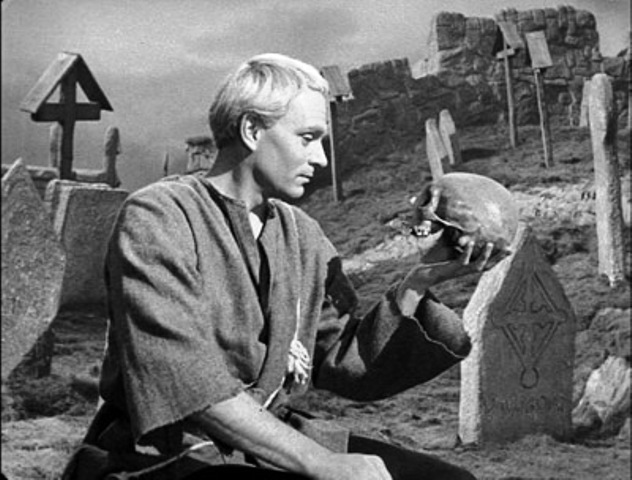
Perhaps Dickinson had been thinking of Hamlet’s famous soliloquy as she composed this poem. Both poets were drawn by the mysteries beyond the grave that are unknowable to the living. Shakespeare has Hamlet say as much:


But that the dread of something after death,
The undiscovered country, from whose bourn

No traveler returns, puzzles the will
And makes us rather bear those ills we have,
Than fly to others we know not of.
(3.1.76-82)

Dickinson here expands on the idea of death as an “undiscovered country,” as she drily asks a series of rhetorical questions, the answers to which are all unknown. With her flair for the dramatic (so weirdly and wonderfully wedded to her ambiguous abstractions), she begins with a compelling imperative: “Is it dead – Find it.” The “it,” as in F431, refers to a person. Unlike that poem, however, this time Dickinson seems to be referring to the soul as well as the body.

            She follows the imperative by noting that the dead one is now both “out of sound” and “Sight.” The body is buried, the soul perhaps departed. There will be no finding it. There is no answer to whether or not it is happy either. You may as well try to answer the question about whether you or the wind is the wiser. It’s an interesting juxtaposition: the wind is like spirit whereas the “you” is of flesh. Any wisdoms either possesses would be of such different orders that there would be no meaningful comparisons, so don’t bother asking.
            A question about consciousness follows. Are the dead conscious? This is the million-dollar question, for sure. If only we knew whether or not we existed in some conscious form after death, our lives and the world would be very different.  Dickinson summarily dismisses the question. Ask the grave, she says. She calls it the “low Ground,” adding a dollop of negativity.
            The second stanza continues, with a question about whether or not the dead are homesick. Her dismissive answer is that even though there are a lot of dead, none of them can answer for the particular departed one for they are as speechless, as “dumb,” as he/she.

Just three poems ago she was telling a corpse that she would see it again. In numerous other poems she also talks about an afterlife where people maintain their earthly identities in perfected form. I read the questions, then, as germinating in both skepticism and bitterness. With Dickinson telling us that there are no answers, she is also saying that anything she believes about an afterlife is not based on empirical evidence. There is only the great silence at the other side of that wall.

            The bitter flavor of the poem seems to follow the outpourings of love and grief in F431. In that poem, after “making signs” to the dead beloved so that he would notice her, she was left alone and bereft. There was no reply, no sign given in return. And so Dickinson challenges the reader. Can you find it? Can you get a reply where I didn’t?

The unsatisfactory conclusion is mirrored in the poem’s construction: one has to look hard to find even any slant rhymes (perhaps “Wind” and Ground”); there is no regular meter or stanza form. Instead, what we have is much like modern free verse. Dickinson marks a couple of places for emphasis by making them slow reads: “low Ground” is one; “Themself – as dumb” is the other. Both lines end their stanzas on a note devoid of hope. And yet, comfort might be taken in the great void that swallows up the dead. Where they are, how they feel, if they even are conscious at all is unknown. So “eat, drink, and be merry,” the advice from Solomon (Ecclesiastes 8:15), another wisdom poet, is perhaps after all the best way to live.